The Craft Beer Beginner's Checklist: 12 Styles to Try Before You Call Yourself a Beer Geek
A practical checklist of 12 essential beer styles, with tasting cues and classic examples, plus simple...

A fresh keg, a clean glass, a quiet Saturday. The setup is right there, and then the pour comes out half foam, half flat, and somehow warmer than the fridge it came from. Draft beer at home is unforgiving in a way bottles are not. The beer is exposed, the equipment is small, and every small error shows up in the glass. The good news is that almost every problem comes from the same short list of habits, and each one has a fix you can make before the next pint.
What follows are the ten mistakes that show up most often in home setups. Some take a minute to correct. A few can ruin a keg slowly over weeks. All of them are worth knowing.
Ice-cold is not a virtue. Serving everything at 2°C flattens the aroma and mutes the malt, which is why a stout pulled near freezing tastes like almost nothing. Lagers and lighter ales are happiest around 3–5°C. Pale ales and IPAs sit well at 6–8°C. Stouts, porters, and most Belgian styles open up closer to 10–13°C.
If you store kegs in a fridge you rarely adjust, pick a middle setting and let the glass do the work. A room-temperature glass will warm a cold pour by several degrees in the first minute, which is often exactly what a hoppy beer needs.
Most "bad pour" complaints are actually dirty glass complaints. A glass that looks spotless can still carry a film of detergent, grease, or lip balm, and that film kills the head instantly. Foam collapses, bubbles cling to the side, and the beer goes flat in minutes.
Wash glasses by hand in hot water with a small amount of unscented detergent, rinse twice, and let them air-dry upside down on a clean rack. Never dry them with a towel. Skip the dishwasher if you can; rinse aids are foam killers.
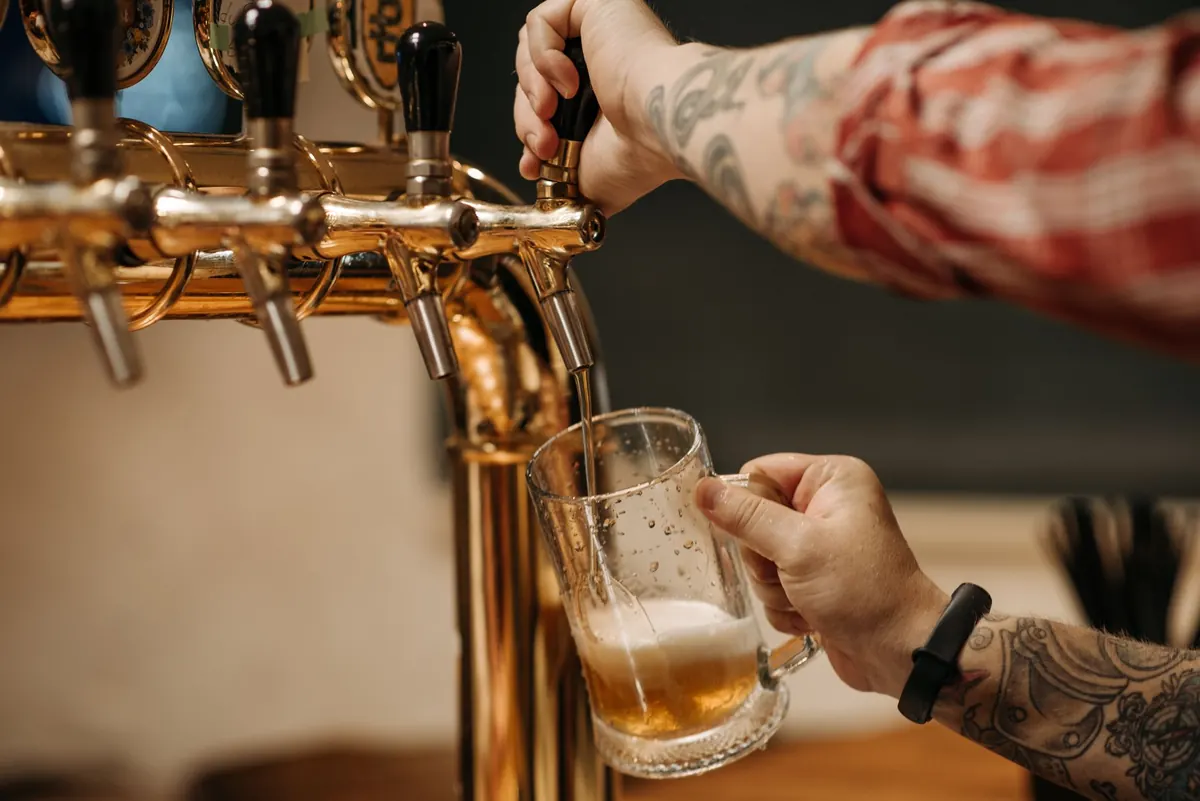
If the tap is pointed straight at the bottom of the glass, the beer hits hard, releases carbonation all at once, and you get a glass of foam. Tilt the glass roughly 45 degrees and let the beer run down the side. That gentle path keeps carbon dioxide in solution.
Straighten the glass when it is about two-thirds full and let the last portion build the head. This is the part most people skip, and it is the difference between a beer with a head and a beer with a foam cap that dies in thirty seconds.
Chilled beer into a warm glass is a slow, annoying loss. The beer warms, the carbonation comes out of solution, and the pour you worked for starts to look tired before you sit down.
Keep two or three glasses in the fridge or rinse them with cold water just before pouring. Do not freeze them. Frosted glasses look good in photos and hurt the beer, because ice crystals on the inside knock carbonation out of the liquid on contact.
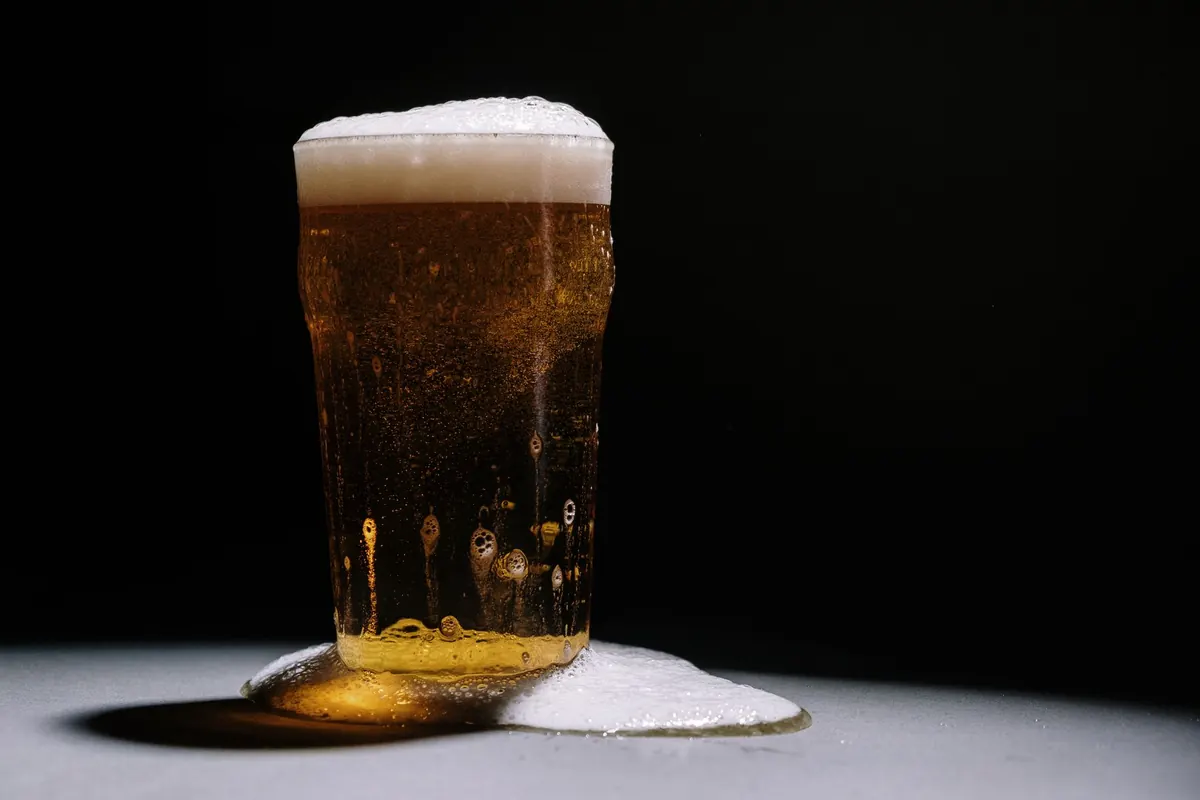
No head is as much a mistake as a glass of pure froth. A proper head is roughly two fingers deep, or about 2–3 cm, and it should hold for several minutes. The head carries aroma, which is most of what you taste, and it protects the beer from going flat.
If you are pouring too much foam, the cause is usually one of three things: the keg is too warm, the line pressure is too high, or the beer is being poured too fast. Check temperature first, since it is the easiest to fix. If foam still dominates, drop the serving pressure slightly and let the system settle for an hour before pouring again.
Carbonation is a balance between temperature and pressure, and it changes as the keg empties. Set your regulator to match the beer style and holding temperature, and check it every week or so. A keg held at the wrong pressure for days will either go flat or push foam no matter how good your technique is.
Also, watch for leaks. A slow CO2 leak is easy to miss until the tank runs dry mid-party. A drop of soapy water on the connections will show bubbles where gas is escaping.
Beer line is not a neutral pipe. Residue builds inside it, and after a few weeks that residue changes the flavour of everything that passes through. Clean your lines between kegs, and clean the tap and faucet too, including the spout and the seal.
Keep the line short and cold. A long run of warm tubing sitting in a cupboard is a beer heater, and warm beer through a tap produces foam.
Clean is the minimum. Shape matters too. A tapered pint glass concentrates aroma better than a straight-sided tumbler, and a tulip or snifter works better for stronger, maltier beers. If you mostly pour IPAs, a slightly wider, curvy glass gives the hops somewhere to go.
The old bar trick of running a knife over the top of the glass to level the head does nothing good. It breaks the foam structure, pushes liquid and CO2 out, and leaves a flat surface that collapses quickly. Let the head settle on its own and top up gently if the glass is short.
Rushing the final top-up is how a good pour becomes an average one. Pour to about two-thirds, let the head settle for ten or fifteen seconds, then top off slowly with the glass upright. The result settles faster and holds longer than a single fast fill.
If you only change three things this week, change these: chill your glasses, tilt the pour and finish upright, and check that the keg is sitting at the right temperature. Those three cover most of the foam trouble in home setups. After that, set your pressure properly, keep the lines clean, and match the glass to the beer. None of it is complicated. It just has to be done consistently, and the reward is a pint at home that tastes like it came from a good taproom.
Practice with a beer you know well. When the pour starts coming out clean, with a head that holds, and a taste that matches what you expect, you will know the setup is working. Give yourself room to pour a couple of imperfect pints along the way.
Photo: Pavel Danilyuk / Pexels
A practical checklist of 12 essential beer styles, with tasting cues and classic examples, plus simple...
Five non-alcoholic beers ranked on flavor, body and sessionability, plus serving tips to get the most out...
Seven affordable, food-friendly lagers built for hot afternoons, plus pairing notes and serving tips so...