The Craft Beer Beginner's Checklist: 12 Styles to Try Before You Call Yourself a Beer Geek
A practical checklist of 12 essential beer styles, with tasting cues and classic examples, plus simple...

A tap list can feel like a test you didn't study for. Twenty handles, a few words you don't recognize, and a bartender who is already three orders deep. Here's the relief: almost every beer you'll ever order belongs to one of two families. Learn what separates them and the rest of the menu starts arranging itself.
That single dividing line is yeast. Not color, not country, not how fancy the label looks. Once you understand what the yeast is doing, you can predict roughly what's in the glass before you order it.
Every beer starts with the same four ingredients: grain, water, hops, and yeast. The grain gets mashed, the liquid gets boiled with hops, and then yeast is pitched in to eat the sugars and produce alcohol and carbon dioxide. Ales and lagers split apart at that last step.
Ales are fermented with Saccharomyces cerevisiae, a yeast that works best in warmth — generally somewhere in the 60s and low 70s Fahrenheit. It ferments quickly, often finishing in a few days, and it tends to rise up into the foam at the top of the tank. That's why you'll still hear brewers call ales "top-fermented."
Lagers use Saccharomyces pastorianus, a different species that prefers cooler temperatures, usually in the 45 to 55 degree range. It works more slowly, and at the end of fermentation it tends to drop toward the bottom of the vessel, hence "bottom-fermented." After that, the beer is stored cold for weeks to smooth out. The German word lagern means "to store," which is where the name comes from.
Worth saying plainly: both are beer, and neither is the advanced option. Anyone who tells you lagers are boring or ales are for people with a palate is describing their own preferences, not a rule.
Yeast does more than make alcohol. It throws off aroma compounds as it works, and temperature decides how many of them survive into your glass.
Warm fermentations are busy and expressive. They produce esters and phenols — the same family of compounds that make ripe bananas smell like bananas. That's why a German wheat beer tastes like clove and banana, why a saison can taste peppery, and why many English ales have a soft stone-fruit note underneath the malt.
Cool fermentations suppress most of that. Lager yeast works quietly, so what you taste is mostly the grain and the hops without a layer of fruit on top. The result is the clean, crisp quality people mean when they say a beer is "refreshing" or "crisp as a cold Pilsner."
A few styles don't fit neatly. Kölsch and altbier are ales — top-fermenting yeast — but they're fermented cool and then cold-conditioned, so they land closer to a lager in texture. California common, sometimes called steam beer, goes the other way: lager yeast fermented warm. If you taste something and can't decide which family it belongs to, this is usually why.
First, ignore color. It's the least useful clue on the board. A schwarzbier is nearly black and drinks like a lager; a hazy pale ale is golden and drinks like an ale. Roasted grain makes beer dark, and roasted grain shows up in both families.
Instead, work from what you want the beer to do. If you want something cold and quenching alongside food, lean lager. If you want something to sit with and think about, lean ale.
The fastest way to learn the difference is to taste it side by side. Order a small pour of a Pilsner and a small pour of an American pale ale. Take a sip of each, wait a few seconds, then swap. The lager will taste cleaner and more defined; the ale will taste rounder, fruitier, and a bit heavier in the mouth. That contrast is the whole lesson.
Then start paying attention to what you actually like. Note the style, not the brewery, and you'll quickly find a short list of names you trust. A couple of rounds like that and the tap list stops looking like a test — it looks like a menu with a few things you're already excited about.
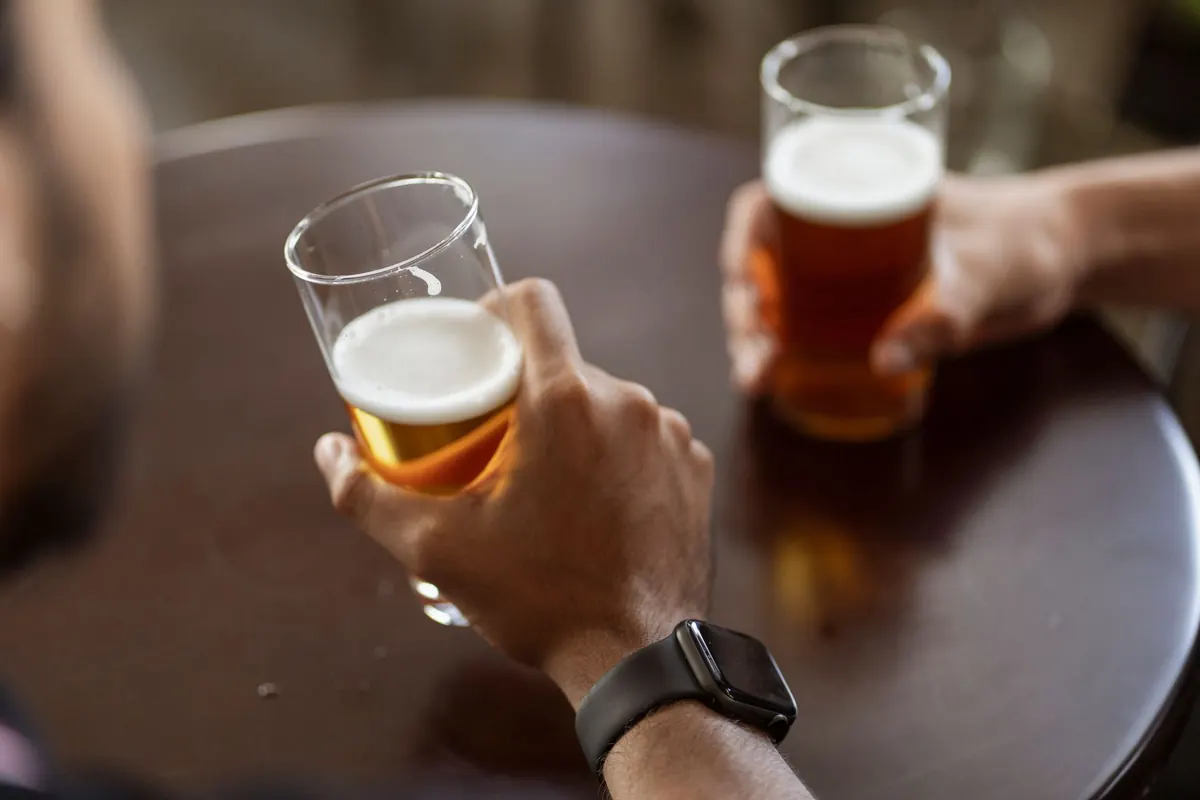
Photo: Ketut Subiyanto / Pexels
A practical checklist of 12 essential beer styles, with tasting cues and classic examples, plus simple...
Five non-alcoholic beers ranked on flavor, body and sessionability, plus serving tips to get the most out...
Seven affordable, food-friendly lagers built for hot afternoons, plus pairing notes and serving tips so...